
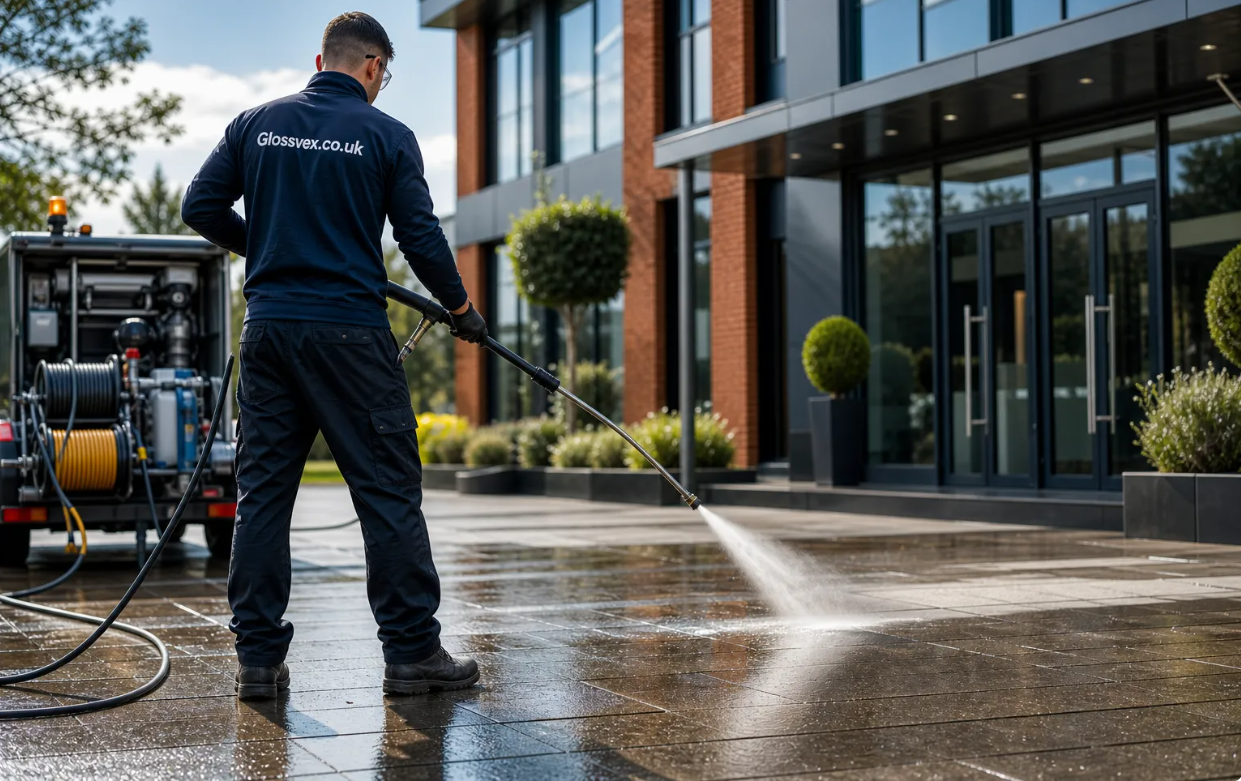
How Commercial Pressure Washing Boosts Business Curb Appeal
Customers form a rapid first impression on arrival, one that typically precedes reading signage or speaking to a member of staff. The state of your car park, façade, and entrance is doing that work for you, silently, every single day. How commercial pressure washing improves kerb appeal for businesses is not simply an aesthetic question; it is a straightforward commercial decision with measurable consequences for footfall, safety, and property value.
Customers form a rapid first impression on arrival, one that typically precedes reading signage or speaking to a member of staff. The state of your car park, façade, and entrance is doing that work for you, silently, every single day. How commercial pressure washing improves kerb appeal for businesses is not simply an aesthetic question; it is a straightforward commercial decision with measurable consequences for footfall, safety, and property value.
Professional exterior cleaning is a cost-effective tool for controlling that first impression, and one that is consistently underused relative to its return. This article covers the specific surfaces that matter most, which cleaning methods work for each type of contamination, how often a commercial site genuinely needs attention, and what the investment typically looks like for UK businesses. Across commercial sites in Greater Manchester, the pattern is consistent: businesses that maintain their exteriors hold a visible advantage over those that let standards slip.
What a dirty commercial exterior actually costs your business
Survey data tells a stark story. A consumer study widely referenced across UK retail and property sectors found that 95% of consumers say exterior appearance influences where they choose to shop, and 52% have actively avoided a business because the storefront looked dirty. These are not marginal figures. They represent a likely loss of potential customers and associated revenue before a single conversation has taken place. Kerb appeal is a commercial asset, not a cosmetic indulgence.
The trust dimension compounds this further. Streaked walls, stained entranceways, and neglected signage surrounds communicate a broader lack of care, regardless of what happens inside. For service businesses, hospitality venues, and retail premises, this perception gap is associated with reduced footfall and may reduce repeat visit rates. In our experience working across commercial lettings and retail sites, clean and well-maintained properties consistently attract stronger leasing interest and better-quality occupiers than neglected equivalents.
Deferring maintenance also carries a structural cost that is easy to underestimate. Algae and moss produce organic acids that degrade concrete and mortar over time, while oil contamination seeps into surfaces and accelerates cracking. Carbon deposits on façades trap moisture and create conditions for mould growth. Regular cleaning reduces the risk of expensive structural repairs rather than simply improving appearances, which shifts the entire economics of the decision.
How commercial pressure washing improves kerb appeal: the surfaces that matter
Car parks are frequently the first surface a visitor physically contacts, yet they are often the last to receive attention. Oil stains, tyre marks, gum deposits, and accumulated grime combine quickly in high-traffic environments to create a visually degraded space. More critically, these contaminants create genuine slip hazards in wet conditions. Heavy oil deposits on commercial hardstanding require hot-water pressure washing combined with a degreaser; standard cold-pressure cleaning spreads the residue rather than lifting it.
Building façades accumulate two distinct problems at once: biological growth and airborne deposits. Algae, lichen, moss, carbon deposits, and exhaust residue all build up differently depending on aspect, surface type, and local pollution levels. A streaked or green-tinted façade signals age and neglect regardless of how well-presented the interior is. Façade cleaning typically produces one of the most noticeable visual improvements to a commercial exterior, and it is often the area where the return on investment is most immediately obvious.
Entranceways and pedestrian walkways carry the most concentrated foot traffic on any commercial site, making them both the most scrutinised surfaces and the most hazardous when neglected. Green or black staining around entrance doors reads as deeply uninviting to arriving customers. Wet biofilm on smooth paving is a documented slip hazard with direct implications for employer liability. Signage surrounds complete the picture: grime and biological staining on the wall or cladding adjacent to a sign undermine the brand communication the sign was designed to deliver. This happens without a penny of investment in new branding, and without anyone noticing the problem until footfall begins to fall.
Matching the cleaning method to the contamination
Not every surface or contaminant benefits from high-pressure cleaning, and selecting the wrong method causes more problems than it solves. Oil, gum, graffiti, and physical debris on concrete, brick, and hardstanding respond well to pressure washing. Hot-water pressure washing is significantly more effective than cold water for oil and grease specifically because heat breaks down the hydrocarbon bonds rather than simply displacing the residue across the surface. Gum on entrance paving and loading areas lifts cleanly with hot water and pressure; cold water alone will not achieve the same result.
Biological contamination is a different problem and requires a different solution. Algae, moss, lichen, and black spot on façades, rendered walls, timber cladding, and painted surfaces respond best to soft washing: low-pressure application of a biodegradable algaecidal solution that kills organic growth at the root structure rather than blasting off the visible surface layer. High-pressure cleaning on biological growth leaves the root system intact, which means regrowth returns faster than it would after a proper soft-wash treatment. Painted surfaces should only ever be soft-washed; high pressure lifts and chips paintwork and may void some manufacturer or installer warranties, always check the warranty terms before specifying a method.
At GLOSSVEX, assessing the surface type and contamination level before selecting equipment or chemistry is standard practice on every large-scale commercial site we handle. This step is the clearest distinction between a professional operator and a hire-machine approach, and it makes a significant difference to both the result and the longevity of that result. For details of our approach, see our commercial pressure washing service.
How often commercial pressure washing improves kerb appeal for businesses: cleaning intervals by surface
Concrete car parks, delivery yards, and pedestrian areas in regular commercial use accumulate contamination faster than most facilities managers expect. A three-to-six-month cleaning cycle maintains appearance, prevents staining from setting permanently, and keeps slip-risk surfaces clear of biofilm and oil residue. The specific interval depends on footfall volume, proximity to food preparation or waste areas, and local tree cover, which accelerates organic growth considerably on northern UK sites.
Brick façades and rendered walls tolerate the elements well but develop algae and carbon deposits over time depending on aspect and local pollution levels. Most sources recommend a six-to-twelve-month cleaning interval for brick and render, with walls in high-exposure or higher-pollution environments typically requiring attention at the shorter end of that range. An annual clean maintains the surface effectively for many sites without over-cleaning, which can erode mortar on older brick; walls with greater exposure to airborne deposits will need more frequent attention. Timber cladding and painted exterior surfaces require the most cautious approach of all.
For timber and painted surfaces, the cleaning interval is driven by visible contamination rather than a fixed schedule, and the method must always be low-pressure soft washing. Over-cleaning timber accelerates weathering; a once-yearly assessment with targeted treatment where biological growth is active is the appropriate approach for most UK commercial properties.
Safety, compliance, and what your site legally requires
The Health and Safety at Work Act 1974 and the Occupiers' Liability Acts place a clear duty of care on commercial property owners and facilities managers to maintain safe access surfaces. Algae, biofilm, and oil contamination on walkways, car parks, and entranceways directly increase slip-and-fall risk, which is a foreseeable and preventable hazard under HSE guidance. A documented regular cleaning programme provides evidence of due diligence and can materially reduce exposure in the event of a public liability claim.
Industrial-grade commercial pressure washing equipment operates at significantly higher flow rates and temperatures than consumer or semi-professional hire machines. This produces faster, more thorough cleaning without extended site disruption. GLOSSVEX carries full public liability insurance on every commercial job across Greater Manchester, uses industrial-grade equipment specified to each surface type, and schedules work around business hours to minimise disruption to staff and customers
UK commercial sites also carry environmental compliance obligations that are easy to overlook. Pressure washing runoff from car parks and hardstanding cannot be discharged into surface-water drains without proper management; runoff from oil-contaminated car parks in particular may require containment or vacuum recovery under Environment Agency and Scottish SEPA guidance. Professional commercial operators address wastewater management as a matter of course; a hire-machine approach may not provide the same level of containment. For a practical UK-focused overview see this pressure washing environmental compliance guide.
What commercial pressure washing costs and how to measure the return
UK commercial pricing varies by surface type, contamination level, and access requirements. As a practical guide for 2026:
*Car parks and hardstanding: £0.80 to £2.00 per m², rising with heavy oil removal requirements
*Storefront façades: £1.50 to £3.50 per m², with access equipment above two storeys adding significant cost
*Paving and walkways: £1.20 to £2.80 per m²
*Graffiti removal: £3.00 to £6.00 or more per m², depending on surface type and paint layers
The most professional approach for any commercial property is a flat-rate quote derived from a site inspection and square-metre calculation. This removes pricing uncertainty and accounts for UK-specific variables: access requirements, wastewater management obligations, and HSE traffic management considerations for live car parks. Avoid contractors who quote without a site visit; they are either underquoting to win the job or carrying risk that will surface later. For additional market context on the cost of commercial pressure washing services see an independent industry overview.
The return on a consistent cleaning programme is straightforward to frame in practical terms. A regular programme reduces repair costs by slowing the structural degradation that deferred cleaning accelerates, lowers insurance exposure through documented maintenance, and supports higher property and leasing value. There is also the direct commercial benefit of a clean, inviting exterior that drives footfall rather than discouraging it. A quarterly car park clean and an annual façade refresh can cost substantially less than a single major structural repair or liability settlement, and the comparison only improves the longer a maintenance programme is sustained. The wider business benefits of routine exterior cleaning are well documented in industry resources emphasising the importance of pressure washing for commercial buildings.
For large-scale commercial sites across Bolton, Manchester, Bury, Wigan, Rochdale, and the wider Greater Manchester area, GLOSSVEX provides transparent itemised quotes, full public liability insurance, industrial-grade equipment, and flexible scheduling built around your operational hours. Request a no-obligation site visit to get an accurate quote before committing to anything.
A clean exterior is a commercial decision, not a cosmetic one
Commercial pressure washing is not an optional upgrade; it is a maintenance decision with measurable impact on customer perception, safety compliance, property value, and long-term repair costs. Improving kerb appeal for businesses through commercial pressure washing starts with the surfaces that matter most, car parks, façades, entranceways, and signage surrounds, and these are also the easiest to address with a consistent professional cleaning programme. A three-to-six-month cycle for hardstanding, six-to-twelve months for brick and render, and as-needed soft washing for timber and painted surfaces covers the vast majority of commercial properties effectively.
If your commercial exterior is overdue a professional clean, a site assessment from a fully insured, experienced team is the right first step. A clean exterior is one of the few improvements that costs relatively little, delivers results immediately, and keeps working for your business every single day that your doors are open. Get in touch with GLOSSVEX to arrange a no-obligation visit and see exactly what a professional clean can do for your site.
Found this useful? Leave a like.